Table of Contents
- Montana Home Selling
- Which Areas in Montana Offer the Best Return on Investment and Are Easiest for Residential Property Development?
- What Home Styles, Sizes, and Features Tend to Sell Fastest in the Montana Market?
- What Should Home Sellers Know About Zoning Laws, Permits, and Regulatory Requirements in Montana?
- Which Towns or Cities in Montana Are Easiest, and Hardest, When It Comes to Navigating Real Estate Regulations?
- What Are the Most Effective Flipping and Resale Strategies for Maximizing Profit in Montana's Housing Market?
- How Should Sellers Price Their Homes to Attract Buyers While Maximizing Value in Montana?
- Which Key Economic, Social, and Regulatory Factors Are Driving Current Trends in Montana's Local Property Markets?
Montana Home Selling

Investing in Montana real estate offers considerable potential for flippers, developers, and landlords alike. As of October 2025, the statewide median home sale price stood at $545,700, roughly 24% higher than the national median of about $440,000.
According to the Montana Department of Revenue, median home values soared by 66% between 2021 and 2025. Since then, prices have stabilized, though real estate in the Treasure State remains among the more expensive Mountain West markets, while continuing to offer relative affordability compared to high-demand hubs like Colorado.
On the supply side, Montana has seen an uptick in construction activity as part of a broader Mountain West trend. Though the state accounts for just 0.3% of the U.S. population, it was responsible for 0.4% of all U.S. permits in 2024. With roughly 5 months of supply, Montana's real estate market is fairly balanced. The number of homes for sale remains higher than in previous years, though steady demand from higher-cost-of-living areas like California, Washington, and Colorado continues to support elevated prices.
The market pace in Montana remains relatively measured. According to Federal Reserve Economic Data (FRED), homes in Montana spend a median of 85 days on the market as of October 2025, more than three weeks longer than the national median of 63. This slower movement reflects the state's more deliberate buying patterns, particularly in rural areas where properties often cater to niche demand and smaller buyer pools.
Though Montana home prices are above the national median, its property tax rate of 0.76% sits below the national average of roughly 0.90%. (Note that recent tax reforms have introduced tiered rates ranging from about 0.76% to 1.90% for higher-valued properties.) However, the state offers attractive savings opportunities with no sales tax and no real estate transfer tax, helping keep overall transaction costs comparatively low.
Foreclosure activity in the Treasure State remains minimal, contributing to the market's stability. As of October 2025, Montana saw just one foreclosure for every 20,918 housing units, the second-lowest rate of any state in the nation.
Which Areas in Montana Offer the Best Return on Investment and Are Easiest for Residential Property Development?

Montana, also known as the Treasure State, has a rich cultural heritage and a growing real estate market. For both local and out-of-state investors, Montana's housing market continues to offer attractive options. The appeal of the Treasure State goes beyond its recreational infrastructure and stunning landscape, its low population density and robust economy create a unique blend of rural serenity and urban conveniences.
Despite the offer of a broad range of real estate investment opportunities, not every local market in the state offers the same potential returns on investment. For investors seeking maximum returns, the following locations may be worth considering:
-
Cut Bank: Cut Bank offers strong investment potential due to its affordability and impressive property appreciation rates, estimated at more than 70% in five years. The area benefits from low property taxes, low unemployment, and proximity to energy and agricultural sectors, making it ideal for value-focused investors.
-
Anaconda: Anaconda's historic charm and ongoing downtown revitalization projects have helped boost property values by more than 107% over five years. The city's relatively affordable housing stock and proximity to recreational areas like Georgetown Lake attract both full-time residents and second-home buyers.
-
Deer Lodge: Deer Lodge, with over 84% appreciation in recent years, combines low entry prices with quiet, small-town living. The presence of state institutions and local businesses provides stable employment, supporting consistent housing demand.
-
Laurel: Located near Billings, Laurel offers investors access to a growing population and a strong local economy. Its low unemployment rate and pandemic-driven population growth have made it a reliable area for both property appreciation and rental demand.
-
Helmville: Helmville is an emerging rural market in Powell County, boasting returns of over 155% between 2016 and 2025. The area's appeal lies in its scenic ranchland, access to outdoor recreation, and affordability, attracting remote workers and retirees.
-
Bozeman: Supported by a steady 3% annual population increase over the last decade, a blossoming tech sector, and Montana State University, Bozeman's home values have risen nearly 90% in five years. The area also experiences consistently high demand and limited new supply.
-
Helena: Helena is attractive to investors due to its status as the state's capital, offering stability and solid price appreciation. With an average home value of around $466,000, prices in Helena increased at a rate of roughly 9% per year between 2020 and 2025. A strong employment base in government, healthcare, and education supports steady housing demand, while limited inventory and growing competition make Helena a promising location for residential property investment.
-
Billings: As Montana's largest city, Billings is a regional economic hub with stable growth in the healthcare, retail, and energy sectors. Neighborhoods like West End and Heights are popular for residential development due to their mix of affordability, job access, and community amenities.
-
Missoula: Missoula benefits from the presence of the University of Montana, a growing tech sector, and outdoor attractions that make it one of the state's most in-demand housing markets. Investor activity thrives in areas near the city's downtown and the university's campus, where rental demand remains high.
-
Whitefish: Whitefish stands out as a luxury market with opportunities for high-end homes and vacation rentals. Its proximity to Glacier National Park, booming tourism industry, and strong short-term rental demand make it especially attractive for vacation homes and luxury residential development.
What Home Styles, Sizes, and Features Tend to Sell Fastest in the Montana Market?

As one of the most rural states, Montana's real estate market typically sees homes spend more days on the market relative to the nationwide median. Statewide, homes spent about 85 days on the market in October 2025. However, in hot local markets and more populated areas, homes tend to sell faster. While properties generally sell faster in urban markets than more rural neighborhoods, the following features also support faster home sales throughout the state:
-
![]() Bedrooms: Homes with 3-4 bedrooms and 2 bathrooms are generally among the fastest-selling properties in Montana, especially in cities like Billings, Helena, and Missoula. Buyers feel these types of homes provide the right balance between affordability and practicality.
Bedrooms: Homes with 3-4 bedrooms and 2 bathrooms are generally among the fastest-selling properties in Montana, especially in cities like Billings, Helena, and Missoula. Buyers feel these types of homes provide the right balance between affordability and practicality.
-
![]() Size and Lot: Homes with 1,500-2,500 square feet on 0.25- to 0.5-acre lots offer buyers enough room for outdoor life and gardening, while still being manageable. These types of homes are selling fast, especially in locations like Gallatin Gateway.
Size and Lot: Homes with 1,500-2,500 square feet on 0.25- to 0.5-acre lots offer buyers enough room for outdoor life and gardening, while still being manageable. These types of homes are selling fast, especially in locations like Gallatin Gateway.
-
![]()
Classic Styles: Buyers in towns such as Whitefish, Columbia Falls, and Big Sky, where lifestyle appeal and scenic surroundings matter, gravitate toward styles that feel both timeless and regionally authentic, such as:
-
Classic Bungalow designs, which are prized in Helena and Great Falls for their proportions, steep roofs, and timeless curb appeal.
-
Mountain lodge home designs, which are sought in Kalispell suburbs for their natural feel, exposed beams, and family-friendly open floor plans.
-
Updated Victorian cottages, which are popular in downtown Missoula and Anaconda, where historic charm meets modern systems.
-
Urban condos and townhouses in Bozeman's core, which are favored by professionals and investors and tend to close faster than detached homes.
-
Ranch-style homes, which are in high demand in rural Gallatin and Bitterroot Valleys for their convenient single-level layouts.
-
Craftsman bungalows, which are sought in Hamilton and Stevensville, blending artisanal details with open interiors.
-
Modern farmhouses, which are popular in new-build subdivisions around Bozeman and Billings for combining rustic materials with clean, contemporary lines.
-
-
![]() Modern Upgrades: Homes showcasing open-concept kitchens, energy-efficient appliances, fresh neutral paint, and updated bathrooms consistently attract the most attention. If professional staging and photography are used, these can speed up sales by as much as 70% and increase listing views by over 60%.
Modern Upgrades: Homes showcasing open-concept kitchens, energy-efficient appliances, fresh neutral paint, and updated bathrooms consistently attract the most attention. If professional staging and photography are used, these can speed up sales by as much as 70% and increase listing views by over 60%.


What Should Home Sellers Know About Zoning Laws, Permits, and Regulatory Requirements in Montana?

To ensure a lawful and profitable property sale in Montana, home sellers must have a good understanding of local zoning laws and permitting procedures, which are largely established at the county and municipal levels. These zoning rules play a key role in guiding how land can be used and developed across the state. Note that zoning laws not only impact the type of structure that can be built in a particular location but also a property's marketability and value. Properties that align with local zoning codes and are located in zones that allow broader or higher-value uses, such as mixed-use or multifamily residential, often carry greater value.
Furthermore, prospective buyers in Montana may request a zoning compliance letter (also known as a zoning verification letter or a zoning clarification) as part of their due diligence process. Although sellers aren't required by law to provide such documentation, being able to present this letter may improve buyer confidence and help close deals quickly. A zoning compliance letter confirms that the property's existing use matches its allowed use, and that no unresolved violations or disputes exist.
As Montana's zoning regulations vary considerably between municipalities, property owners and developers are encouraged to consult with local planning offices to verify requirements that apply to their property.
The following information shows the variation in zoning laws and other regulatory requirements across different parts of Montana, including those that are stricter, less strict, or subject to special rules:
-
Areas with strict zoning laws: Certain Montana jurisdictions are known for imposing rigorous restrictions on land use, building density, and minimum lot sizes. In Gallatin County, zoning regulations in rural zones like the Gallatin Canyon/Big Sky Planning and Zoning District impose large minimum lot sizes, often requiring 20-160 acres for new subdivisions, especially in agricultural or scenic areas. Similarly, Missoula County applies strict slope and soil-based development criteria in its hillside and resource-protection areas.
-
Jurisdictions with less bureaucratic zoning laws: Some parts of Montana encourage development with more flexible, mixed-use zoning codes or simplified review procedures. The City of Billings stands out for its Neighborhood Mixed-Use and Corridor Mixed-Use zones, which allow for a broad range of commercial and residential combinations without extensive special approvals. In addition, the City of Helena has adopted form-based code overlays in its downtown area to support infill and adaptive reuse, reducing permitting friction for developers.
-
Areas requiring a special permit via a public hearing and approval from the zoning board: In several Montana communities, certain projects, such as creating a major subdivision or establishing a business in a residential zone, trigger the need for a Special Use Permit (SUP) or Conditional Use Permit (CUP). These usually require a public hearing and approval from a local zoning commission or city council. For example, in Helena, a CUP may be required for certain business uses, such as a larger day care center in a single-family zone. Similarly, while Missoula allows many townhomes by right, its Unified Development Code still requires public input and City Council review for major subdivisions or projects seeking a variance from standard density limits.
-
Areas where a Certificate of Occupancy is mandatory before legal occupation: Although not every jurisdiction in Montana issues a traditional Certificate of Occupancy (CO), some cities, like Bozeman and Missoula, require final inspection approvals or zoning compliance before a property can be legally occupied. For example, in Bozeman, a final inspection by both the Building Department and Zoning Division is mandatory before utility services can be activated or tenants allowed to move in. In Billings, the city issues either a CO or a Certificate of Final Inspection, which confirms a certain level of safety or the structure's compliance with all approved permits and inspections.
-
Places where historic commission's approval is required for certain projects: In the City of Helena, demolition within the Helena Historic District requires special review and approval from the Lewis and Clark County Heritage Preservation and Tourism Development Council. In Butte-Silver Bow, home to one of the nation's largest National Historic Landmark Districts, projects receiving grants or other incentives may need to go through approval by the Historic Preservation Commission, especially for properties located in the Uptown Butte area.
Which Towns or Cities in Montana Are Easiest, and Hardest, When It Comes to Navigating Real Estate Regulations?

Developers and home sellers in Montana must be familiar with the real estate rules and permitting processes in the specific city or county where their property is located. Compliance with local requirements is essential to prevent costly delays, reduce the risk of legal disputes, complete projects on schedule, and preserve or increase a property's market value.
Across the state, regulatory conditions vary widely. Understanding the specific regulatory conditions in an area can help sellers and developers better position their property for sale or redevelopment.
Development-Friendly Areas
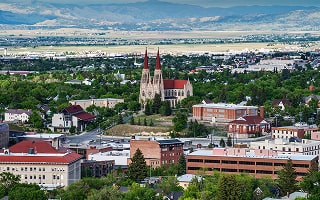
These locations in Montana are generally pro-growth, with flexible land-use policies, clear zoning codes, and faster approval timelines.
- Billings: Montana's largest city supports growth through Corridor Mixed-Use and Neighborhood Mixed-Use zones, which allow for a variety of commercial and residential combinations without requiring multiple special approvals.
- Helena: The capital city uses overlays in parts of its downtown, enabling streamlined permitting and encouraging adaptive reuse. Development projects that meet the form-based criteria typically avoid lengthy variance requests.
- Great Falls: Known for its Urban Renewal Area and Opportunity Zones, the city offers tax increment financing (TIF) incentives and simplified zoning for infill and mixed-use developments in designated corridors.
- Kalispell: The city has updated zoning ordinances to encourage higher-density housing and mixed-use projects near its Core Area, where public-private partnerships have also been used to support redevelopment.
Moderately Regulated Areas
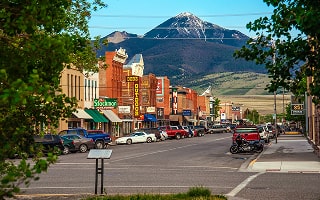
In these parts of Montana, developers and home sellers may encounter some zoning complexity or additional reviews. However, real estate regulations are balanced to allow growth, and the process can usually be navigated with local planning guidance.
- Missoula: While the city supports infill development and has adopted incentives for affordable housing, certain neighborhoods fall under Neighborhood Character Overlays that limit design changes and require additional review for multifamily projects.
- Bozeman: This high-growth market offers streamlined review for some project types, but density increases and short-term rentals may require CUPs, which can involve public hearings and planning board approval.
- Whitefish: Development is encouraged in commercial and mixed-use zones, but strict design standards in the downtown overlay and environmental protections near Whitefish Lake can extend approval timelines.
- Livingston: The city offers flexibility in its mixed-use districts but applies historic preservation reviews for properties in the downtown core, which can add a moderate layer of oversight.
Highly Restrictive or Bureaucratic Areas

These jurisdictions are generally known for mandatory public hearings, strict zoning codes, and high compliance costs. The permitting process can be lengthy, often slowing development.
- Helena Historic District: Demolition projects within the historic district require special reviews and multiple hearings. The process can be slow, with multiple hearings if design revisions are requested.
- Butte-Silver Bow: As part of a National Historic Landmark District, properties that utilize historic incentives or tax credits are subject to restrictions and review by the local historic commission. This review process can be lengthy, especially for changes that deviate from historic guidelines.
- Gallatin Canyon/Big Sky Zoning District: Rural zoning requirements often demand minimum lot sizes of 20 acres or more and include strict slope, soil, and wildfire hazard restrictions, making development timelines longer and compliance more costly.
Regulatory Climate Factors

With the regulatory climate in Montana varying widely between cities, counties, and even specific neighborhoods, understanding local rules is important for planning timelines, budgeting for compliance costs, and ensuring successful outcomes in your real estate investments.
The table below shows regulatory climate factors in various Montana areas, along with their impact on real estate development.
Factor |
Impact on Development |
Where It's Found |
|---|---|---|
Zoning Flexibility |
Determines ease of land use |
Billings (Corridor Mixed-Use zones), Helena (downtown overlays), and Great Falls (Urban Renewal Districts with mixed-use allowances) |
Historic Preservation Laws |
Adds restrictions |
Helena Historic District, Uptown Butte National Historic Landmark District, and Livingston Downtown Historic District |
Wetlands/Conservation |
Limits buildable land |
Flathead County (Whitefish Lake Shoreline Protection Zone), Missoula County (Clark Fork River riparian setbacks), and Gallatin County (wetland overlays in rural zones) |
Inclusionary Zoning |
Requires affordable units |
Bozeman (inclusionary zoning for certain subdivisions and multi-family projects), and Whitefish (affordable housing requirements in new developments) |
Building Code Enforcement |
Affects cost/speed |
Bozeman (strict energy efficiency standards), Missoula (multistep inspection process for new construction), and Kalispell (mandatory final occupancy inspections) |
Local Politics/NIMBYism* |
Blocks or delays projects |
Bozeman (resistance to high-density infill in established neighborhoods), Whitefish (pushback against large resorts and short-term rentals), and Big Sky (opposition to expanding resort-area housing) |
*NIMBYism - Not in My Backyard
What Are the Most Effective Flipping and Resale Strategies for Maximizing Profit in Montana's Housing Market?

Below are some of the most effective approaches to flipping or reselling properties for potentially higher returns in Montana's real estate market:
-
![]()
Target Distressed or Foreclosed Homes: In Montana, identifying and purchasing pre-foreclosures, bank-owned properties (REOs), and short sales at steep discounts can yield outsized returns, especially in smaller or mid-sized markets where inventory turnover is slower but purchase prices are significantly below market value. Distressed properties are typically found in communities with older housing stock or areas that have seen economic shifts, such as certain neighborhoods in Great Falls and Butte, where renovation potential is high. Once acquired, these homes can be rehabbed to modern standards and sold for a considerable profit.
-
![]()
Use the 70% Rule: Applying this strategy helps ensure that after factoring in renovation expenses, holding costs, and resale fees, there's still room for a healthy profit margin. The 70% rule advises investors to offer no more than 70% of the after-repair value (ARV) minus the repair costs. This approach is especially effective in markets with stable comparable sales data like Billings, Helena, and Missoula, where reliable pricing trends allow for more accurate ARV projections.
-
![]()
Use Market Analytics Tools: Leveraging applications such as FlipScout, PropStream, and Frontflip can help investors find and analyze historical sales prices, rental demand, ARV projections, and renovation cost estimates. This is crucial in areas like Kalispell and Whitefish, where seasonal tourism causes demand spikes and price fluctuations that can be difficult to predict without data support. These tools also help identify properties with the highest cash-on-cash return potential, enabling smarter and faster purchase decisions.
-
![]()
Build a Reliable Pipeline: Sometimes, successful flips in the Montana real estate market come down to relationships. Maintaining close ties with contractors, real estate agents, wholesalers, property inspectors, and materials suppliers can dramatically speed up project timelines and improve margins. For example, in Bozeman, where competition for skilled labor can be intense due to rapid development, having pre-established contractor connections can shorten the time required to flip a property.
-
![]()
Renovate Wisely: Over-renovation is a common mistake among Montana flippers, especially in rural markets where buyers prioritize function and charm over luxury excess. The most effective flips focus on modernizing kitchens, upgrading bathrooms, improving energy efficiency, and enhancing curb appeal, without unnecessary high-end finishes that may not align with local price ceilings. For instance, in Great Falls and Helena, buyers value clean, updated homes over extravagant customizations that push a property's price out of its typical market range.
-
![]()
Follow the BRRRR Method (Buy, Rehab, Rent, Refinance, Repeat): In stable rental markets like Bozeman and Missoula, the BRRRR strategy offers investors both immediate renovation value and long-term rental income. This method allows flippers to pull equity from completed projects while still retaining the asset for cash flow. Montana's consistent population growth in certain metros makes this a viable hybrid flipping-and-holding approach for investors with a longer timeline.
-
![]()
Choose the Right Exit Strategy: In Montana, statistics show that homes sold through a realtor average over $79,000 more than those listed For Sale By Owner (FSBO), largely due to broader market exposure and professional marketing strategies. However, for investors prioritizing speed over price, such as those holding high-interest hard money loans, selling to cash buyers can close deals in as few as 7-14 days (although usually at no more than 70% of the property's market value).
-
![]()
Time the Market Seasonally: In Montana's resort- and tourism-driven communities, timing plays an important role in flipping homes quickly. In Big Sky, listing just before ski season can draw high-net-worth buyers looking for winter homes, while in Flathead Lake towns, hitting the market in late spring capitalizes on summer homebuying trends. Therefore, aligning your flip's completion date with peak demand seasons ensures maximum exposure, faster sales, and stronger offers.
-
![]()
Target FHA 203(k) Buyers: This flipping strategy involves marketing homes that qualify for FHA-backed 203(k) renovation loans to first-time buyers and younger households looking for affordable financing options. In Montana, this works particularly well in Billings, Great Falls, and Butte, where there's steady demand for move-in-ready homes that need cosmetic updates, but are priced under FHA loan limits. Targeting this buyer pool allows flippers to sell quickly, since FHA 203(k) financing allows buyers to bundle the purchase and renovation costs into a single loan.


How Should Sellers Price Their Homes to Attract Buyers While Maximizing Value in Montana?

Whether you plan on selling your home or flipping properties for profit in Montana, your pricing approach should reflect current market conditions and the specific strengths of your property. Setting your price in line with recent comparable sales while considering local buyer behavior remains one of the most effective ways to draw serious interest and protect your profit.
Due to Montana's diverse housing market, it's recommended that sellers partner with experienced local real estate agents or licensed appraisers when setting an asking price. These professionals can review active listings, pending transactions, and properties sold within the past 90 days in your specific area, while factoring in current inventory levels, buyer demand trends, and seasonal market shifts. You can then use that data to arrive at a price that balances value, profit, and realistic expectations.
Below are some proven pricing strategies that can help attract buyers and maximize returns when selling a home in Montana's real estate market:
-
![]() Pricing Just Below Below Market Thresholds: In Montana, listing a property just under a key market breakpoint for the local property market can significantly expand the pool of potential buyers and boost showing activity. For example, pricing a home at $499,000 instead of $500,000 can capture buyers searching under $500,000, while appealing to those looking in the mid-to-upper $400,000s. This strategy works well in active mid-tier markets like Billings, Missoula, and Great Falls, where budget-conscious buyers are common and search filters often cap results at specific price points.
Pricing Just Below Below Market Thresholds: In Montana, listing a property just under a key market breakpoint for the local property market can significantly expand the pool of potential buyers and boost showing activity. For example, pricing a home at $499,000 instead of $500,000 can capture buyers searching under $500,000, while appealing to those looking in the mid-to-upper $400,000s. This strategy works well in active mid-tier markets like Billings, Missoula, and Great Falls, where budget-conscious buyers are common and search filters often cap results at specific price points.
-
![]() Charm Pricing (Psychological Pricing): Charm pricing relies on a price positioning approach designed to create a stronger emotional pull for buyers, particularly in starter-home and budget-focused markets. For instance, listing at $349,999 instead of $350,000 can make a property seem more attainable, even though the actual difference is minimal. Charm pricing is effective in Montana's entry-level markets, such as Butte, Helena, and Kalispell, where many buyers are focused on affordability.
Charm Pricing (Psychological Pricing): Charm pricing relies on a price positioning approach designed to create a stronger emotional pull for buyers, particularly in starter-home and budget-focused markets. For instance, listing at $349,999 instead of $350,000 can make a property seem more attainable, even though the actual difference is minimal. Charm pricing is effective in Montana's entry-level markets, such as Butte, Helena, and Kalispell, where many buyers are focused on affordability.
-
![]() Pricing to Create a Bidding War: In tight-inventory, high-demand Montana neighborhoods, particularly family-friendly areas with strong school districts, like parts of Bozeman, Whitefish, and Helena's East Side, strategically listing a property slightly below market value can help generate multiple offers. This competitive momentum often pushes the final sale price well above the original asking price, potentially maximizing sellers returns.
Pricing to Create a Bidding War: In tight-inventory, high-demand Montana neighborhoods, particularly family-friendly areas with strong school districts, like parts of Bozeman, Whitefish, and Helena's East Side, strategically listing a property slightly below market value can help generate multiple offers. This competitive momentum often pushes the final sale price well above the original asking price, potentially maximizing sellers returns.
-
![]() High-Anchor Pricing (Test the Waters): In Montana's high-end markets, such as Big Sky, Whitefish, and luxury segments of Bozeman, listing a property at a price slightly above market value can help gauge what premium buyers are willing to pay for status properties with exceptional views, extra acreage, or custom finishes. Sellers can then adjust strategically if the initial pricing draws strong interest but no offers, using early feedback to set a more competitive price point.
High-Anchor Pricing (Test the Waters): In Montana's high-end markets, such as Big Sky, Whitefish, and luxury segments of Bozeman, listing a property at a price slightly above market value can help gauge what premium buyers are willing to pay for status properties with exceptional views, extra acreage, or custom finishes. Sellers can then adjust strategically if the initial pricing draws strong interest but no offers, using early feedback to set a more competitive price point.
-
![]() Price-Per-Square-Foot Benchmarking: In neighborhoods where housing stock is relatively uniform and comparable sales are easy to track, such as newer subdivisions in Belgrade, Laurel, or parts of Kalispell, pricing based on the local dollar-per-square-foot average provides buyers with clear value comparisons. This method is particularly effective when a home's features, condition, or location slightly outperform the neighborhood average, justifying a modest premium.
Price-Per-Square-Foot Benchmarking: In neighborhoods where housing stock is relatively uniform and comparable sales are easy to track, such as newer subdivisions in Belgrade, Laurel, or parts of Kalispell, pricing based on the local dollar-per-square-foot average provides buyers with clear value comparisons. This method is particularly effective when a home's features, condition, or location slightly outperform the neighborhood average, justifying a modest premium.
-
![]() Appraisal-Backed Pricing: In Montana's financing-heavy markets, including places like Billings, Great Falls, and Missoula, setting an asking price that aligns with a professional appraisal helps ensure the home will pass lender scrutiny. This approach is especially valuable for diverse housing areas where comps vary widely, as it gives both buyers and lenders confidence in the property's value and reduces the risk of a low appraisal derailing the transaction.
Appraisal-Backed Pricing: In Montana's financing-heavy markets, including places like Billings, Great Falls, and Missoula, setting an asking price that aligns with a professional appraisal helps ensure the home will pass lender scrutiny. This approach is especially valuable for diverse housing areas where comps vary widely, as it gives both buyers and lenders confidence in the property's value and reduces the risk of a low appraisal derailing the transaction.
-
![]() Net-to-Seller Pricing: Sellers in Montana who have a specific financial target, such as paying off a mortgage or funding a move, can arrive at their listing price by calculating the amount they need to net after closing costs, then working backward to set the list price. This approach is often used by downsizing homeowners in Helena, Billings, and Kalispell.
Net-to-Seller Pricing: Sellers in Montana who have a specific financial target, such as paying off a mortgage or funding a move, can arrive at their listing price by calculating the amount they need to net after closing costs, then working backward to set the list price. This approach is often used by downsizing homeowners in Helena, Billings, and Kalispell.
-
![]() Urgency Pricing (Motivated Seller Strategy): In situations where a seller considers speed more important than maximizing profit, such as situations involving foreclosure risk, divorce, or reinvestment deadlines, Montana sellers may set their price aggressively low to appeal to serious investors and cash buyers. This is particularly effective in active investor markets like Butte, Great Falls, and Billings, where discounted, ready-to-close properties tend to sell quickly and with fewer contingencies.
Urgency Pricing (Motivated Seller Strategy): In situations where a seller considers speed more important than maximizing profit, such as situations involving foreclosure risk, divorce, or reinvestment deadlines, Montana sellers may set their price aggressively low to appeal to serious investors and cash buyers. This is particularly effective in active investor markets like Butte, Great Falls, and Billings, where discounted, ready-to-close properties tend to sell quickly and with fewer contingencies.


To maximize returns and minimize time on the market, Montana home sellers should align their pricing approach with current market trends and local economic conditions. The table below can help sellers select the strategy that best fits the property's position and the level of buyer demand, helping promote faster sales and higher offers.
Market Condition |
Best Strategy |
|---|---|
Seller's Market |
Underpricing for a bidding war |
Buyer's Market |
Charm pricing or net-to-seller |
Unique, luxury home |
High-anchor + value justification |
Entry-level home |
Just below threshold |
Urgent sale needed |
Aggressive urgency pricing |
Flipper or investor listing |
Appraisal-backed or price-per-square-foot |
Which Key Economic, Social, and Regulatory Factors Are Driving Current Trends in Montana's Local Property Markets?

To navigate Montana's property market effectively, homebuyers and sellers should understand the key factors influencing real estate supply and demand. These factors include the following:
![]() Economic Factors
Economic Factors
 Economic Factors
Montana's economy continues to flourish, with the state seeing steady job growth and rising wages, particularly in construction, healthcare, tourism, and professional services. The Treasure State ranks among the top 10 in the nation for employment growth, with wage gains of about 5% and real wage growth outpacing inflation in 2024. In addition, the state's unemployment rate remains low, averaging around 2.8% in 2025, supporting continued housing demand.
Local housing markets such as Bozeman and Billings continue to experience increases in commercial and residential construction. On the county level, Gallatin continues to issue hundreds of residential building permits annually, though permit activity dipped in early 2025 due to rising costs and regulatory changes.
![]() Demographic and Social Factors
Demographic and Social Factors
 Demographic and Social Factors
Post-pandemic in-migration to Montana has slowed, with the Treasure State's population growing by just 0.5% in 2024. Roughly 6,000 residents moved to growth corridors like the Gallatin and Flathead Valleys, sustaining strong housing demand in the area. In addition, interest in rural and recreational land among remote workers and retirees has pushed up values in gateway communities, such as Bigfork and Columbia Falls, where buyers prize privacy and outdoor access.
![]() Regulatory and Legal Framework
Regulatory and Legal Framework
 Regulatory and Legal Framework
Montana's property market has undergone a significant policy shift following the enactment of sweeping housing reforms in 2023. Laws such as Senate Bills 382, 323, 245, and 528 now require municipalities to allow duplexes, townhomes, accessory dwelling units (ADUs), and mixed-use development by right in many areas. These reforms have already begun to ease development barriers in places like Bozeman, Missoula, and Helena, where local planning departments are adjusting zoning codes to comply. However, despite these reforms, Euclidean zoning still dominates, limiting multifamily density in some smaller municipalities. In addition, short-term rental regulations vary by municipality. For example, Bozeman requires registration and inspections, while Whitefish only allows short-term rentals in specific zones and includes stiff restrictions, licensing, and registration requirements.
![]() Taxation and Fiscal Policy
Taxation and Fiscal Policy
 Taxation and Fiscal Policy
Montana does not levy a sales tax or a real estate transfer tax, helping offer some savings opportunities that aren't necessarily available in neighboring states. In 2023, the state also introduced property tax rebates up to $675 per qualifying household to counter rising property assessments. Additionally, in 2024, the state adopted a simplified income tax structure with lower brackets and a preferential capital gains tax rate, which has attracted interest from real estate investors.
![]() Housing Policy and Government Programs
Housing Policy and Government Programs
 Housing Policy and Government Programs
The Montana Regular Bond Loan Program and down payment assistance programs help first-time homebuyers in Missoula, Great Falls, and Billings access homeownership. Veterans also benefit from a dedicated program that offers below-market mortgage rates statewide. On the rental side, the Housing Choice Voucher waitlist was reopened statewide in July 2025 after a nearly year-long freeze, improving housing access for low-income renters. Furthermore, programs like the Coal Trust Multifamily Homes Program allocated $65 million toward low-interest loans, helping bolster multifamily housing supply, especially in high-need regions like Gallatin County.
![]() Infrastructure and Development Trends
Infrastructure and Development Trends
 Infrastructure and Development Trends
In Billings, projects such as the new Billings Bypass are expected to increase access to undeveloped areas and support new residential growth. Also, Missoula Airport's ongoing terminal expansion and continued road projects along the I-90 corridor are enhancing commuter routes and boosting property development potential along transit nodes. Meanwhile, broadband expansion in rural areas is supporting remote work communities, especially in Ravalli, Lewis and Clark County, and Jefferson County, where population growth is rising outside urban centers.
![]() Market Sentiment and Investor Behavior
Market Sentiment and Investor Behavior
 Market Sentiment and Investor Behavior
Investor interest in second homes and lifestyle properties remains high in locations such as Big Sky, Whitefish, and Flathead Lake, where seasonal demand continues to drive up prices. However, affordability concerns have tempered activity in some urban centers, pushing flippers and small-scale investors toward value-add opportunities in Butte, Great Falls, and Billings. Uncertainty over interest rates and inflation has also caused some buyers to delay purchases, while others are capitalizing on reduced competition in mid-tier markets.
Montana's residential property market presents a rare combination of investment potential, lifestyle appeal, and increasing regulatory opportunities, making it a compelling choice for both local and out-of-state investors. From high-growth urban centers like Bozeman, Billings, and Missoula to steadily appreciating small towns such as Cut Bank, Anaconda, and Laurel, the state offers options that align with diverse budgets and risk profiles. Investors who match the right location with the right property type, and adapt their approach to each market's zoning framework, permit processes, and seasonal demand, may be well positioned to achieve potentially strong returns.
While recent housing reforms and targeted economic incentives have improved development conditions in many communities, Montana remains a state where local variation in regulatory climate can make or break a deal. Success in the the Montana housing market often comes from careful due diligence, working with experienced local professionals, and selecting pricing and resale strategies tailored to current market conditions.
Table of Contents
- Montana Home Selling
- Which Areas in Montana Offer the Best Return on Investment and Are Easiest for Residential Property Development?
- What Home Styles, Sizes, and Features Tend to Sell Fastest in the Montana Market?
- What Should Home Sellers Know About Zoning Laws, Permits, and Regulatory Requirements in Montana?
- Which Towns or Cities in Montana Are Easiest, and Hardest, When It Comes to Navigating Real Estate Regulations?
- What Are the Most Effective Flipping and Resale Strategies for Maximizing Profit in Montana's Housing Market?
- How Should Sellers Price Their Homes to Attract Buyers While Maximizing Value in Montana?
- Which Key Economic, Social, and Regulatory Factors Are Driving Current Trends in Montana's Local Property Markets?